Police face rising crime concerns with limited resources
 Symbolic Image
Bangladesh Police is under growing pressure to tackle violent crime and maintain law and order, with shortages of vehicles, housing and other essential resources continuing to hamper its operational capacity.
Police-recorded murder cases increased from 3,023 in 2023 to 3,786 in 2025, a rise of around 25%, according to a September 2026 research brief by the Global Development Network (GDN).
The study, which reviewed crime and public security between September 2024 and June 2026, also documented growing concerns over mob violence, sexual violence and organized extortion.
Against this backdrop, the force continues to face longstanding logistical constraints.
Although Bangladesh Police has expanded from around 117,000 personnel in 2010 to nearly 250,000, its 639 police stations average fewer than 2 vehicles each, while nearly 90% of personnel remain without accommodation in police housing facilities.
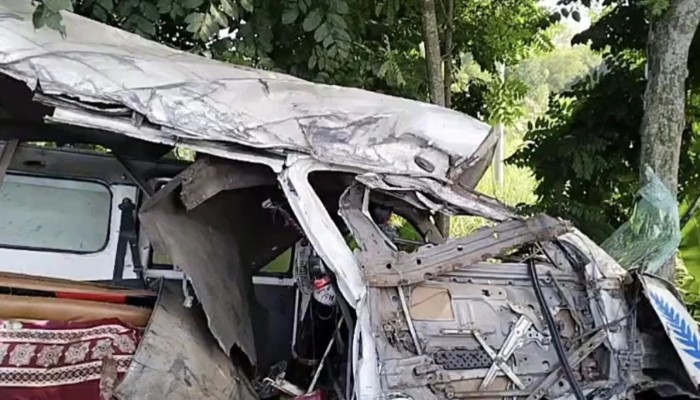
The transport shortage worsened during the July-August 2024 uprising, when 1,074 police vehicles were damaged, including 455 that were completely burned.
The government is now planning to procure 5,830 vehicles for the force at a cost of Tk 6,609 crore. The Executive Committee of the National Economic Council (Ecnec) is scheduled to consider the 2 projects for approval at a meeting on October 25.
Police personnel and former senior officials say the shortages, combined with prolonged duty hours and inadequate rest, are affecting working conditions and could undermine the force's ability to deliver effective public services.
The force's responsibilities have also expanded considerably over the past 15 years. Beyond traditional policing, specialized units have been established to handle investigations, counterterrorism, tourist safety, river policing and security on the urban transport network.
These include the Police Bureau of Investigation (PBI), Tourist Police, River Police, Anti-Terrorism Unit (ATU) and Mass Rapid Transit (MRT) Police.
Analysts say increasing manpower without a corresponding expansion in transport, accommodation, technology and other infrastructure could strain operational effectiveness.
On March 30, Home Minister Salahuddin Ahmed told parliament that police patrols and law-and-order activities had been hampered because many vehicles were burned or rendered unusable during the uprising.
He said the government was taking steps to restore police capacity and replace damaged vehicles.
For officers serving in the field, the shortages are part of everyday duty.
Speaking to on Friday afternoon, Demra Police Station Sub-Inspector Md Jahangir Alam said officers frequently struggled to arrange transport for official duties.
“There are practically no vehicles; we have to go on duty by human hauler (leguna),” he said.
He said police personnel routinely work 12 to 16 hours a day without additional remuneration for extended duty. Food and opportunities for adequate sleep are also insufficient, he added.
The education allowance provided for officers' children is meager compared with their needs, he said.
“Most of us, from constables to SIs, are now counting the days until retirement. We are carrying on with the job only looking at the faces of our families,” he said.
Sub-Inspector Madhab, who previously served at Adabor Police Station and Hatirjheel in Dhaka, said the vehicle shortage had worsened after the July uprising destroyed many police vehicles.
Housing, however, has been a longstanding problem, he said. Police personnel must manage commuting difficulties and family responsibilities alongside demanding work schedules.
Despite the additional workload, housing support remains inadequate, he added.
Speaking to on Friday afternoon, Niaz Mehedi, additional deputy commissioner of the Media and Public Relations Division of Dhaka Metropolitan Police, said officers needed proper accommodation to recover from demanding shifts.
“Police housing must certainly be of good quality so that members can rest well,” he said, adding that adequate rest was closely linked to their mental health.
He also acknowledged the need for more vehicles to improve policing in the capital.
Government plans major vehicle procurement
The proposed procurement is intended to address the force's transport shortage and replace aging vehicles.
According to the Planning Commission's proposal, police stations currently have 1,237 vehicles, of which 64% are more than 10 years old. The aging fleet is disrupting routine patrols, criminal investigations and emergency response services.
The procurement will be carried out under 2 projects. One proposes spending Tk 4,328.92 crore on 4,829 operational vehicles, while the other allocates Tk 2,280.14 crore for 1,001 specialized vehicles.
According to a Planning Division source, both projects are scheduled to be placed before Ecnec for approval on October 25.
Former Inspector General of Police Abdul Kaiyum said manpower had increased over the years without a corresponding expansion in housing and transport facilities.
Without access to police accommodation, personnel face additional expenses and commuting difficulties, he said, adding that these problems had persisted for a long time.
“If the government wants ethical and professional service from police, it must think about their housing facilities and vehicle shortage,” he said.
Dhaka University teacher and crime analyst Touhidul Haque said field-level police personnel carried substantial responsibilities and faced considerable risks, yet often came under the greatest scrutiny during crises and controversies.
He said the government should address shortages of housing, food and vehicles while recognizing the additional duties police personnel perform. Source: DT

 Symbolic Image